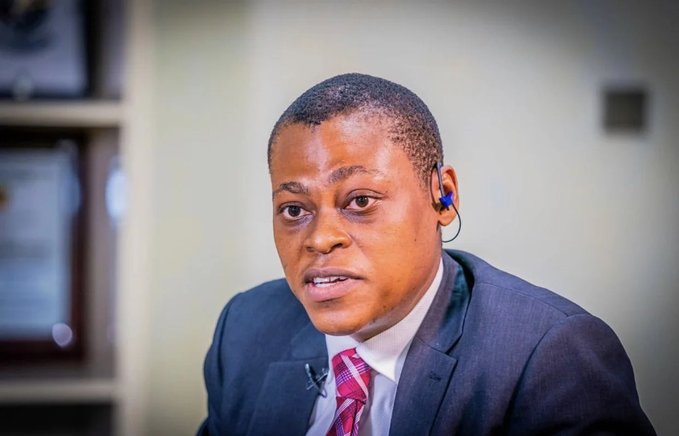
Veteran broadcaster Rufai Oseni has criticised the Minister of Works, David Umahi, over issues surrounding the Environmental Impact Assessment (EIA) for the Lagos-Calabar Coastal Highway project, describing the situation as evidence that Nigeria has become “officially a joke.”
Titansloaded reports that the latest criticism followed renewed public debate over the Federal Government’s handling of the Environmental Impact Assessment for the multi-billion-naira Lagos-Calabar Coastal Highway, one of the flagship infrastructure projects of the administration of President Bola Ahmed Tinubu.
Taking to his X (formerly Twitter) account, Oseni questioned the level of transparency surrounding the project, expressing concern over the manner in which requests for access to the Environmental Impact Assessment were allegedly handled.
The broadcaster argued that Nigerians deserve unrestricted access to documents relating to major public infrastructure projects, especially those financed with public funds.
According to Oseni, transparency and accountability should remain central to the execution of government projects, insisting that citizens have a legitimate right to scrutinise the approvals and regulatory processes guiding such developments.
His remarks come after an earlier televised exchange with Umahi during an interview in which both men disagreed over issues relating to the Lagos-Calabar Coastal Highway. During the interview, the minister defended both the project and the government’s position regarding its implementation.
The disagreement has since generated widespread reactions across social media platforms, where supporters of both Oseni and Umahi have continued to debate the project’s environmental compliance, transparency, and overall execution.
The Lagos-Calabar Coastal Highway has remained one of the Federal Government’s most ambitious road infrastructure projects. However, since its announcement, it has attracted criticism from environmental experts, civil society groups, and opposition voices over concerns relating to environmental impact, procurement processes, and project costs.
Despite the growing public conversation, the Federal Ministry of Works has not issued any fresh statement specifically responding to Oseni’s latest comments at the time of filing this report.
The controversy underscores the increasing public demand for greater transparency and accountability in the planning and execution of large-scale government infrastructure projects across Nigeria.