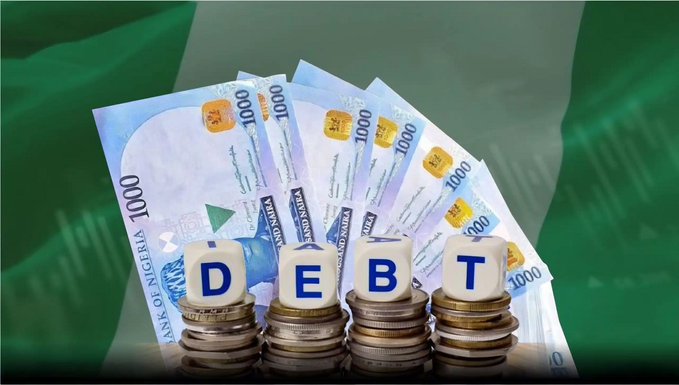
Nigeria’s debt profile is coming under increasing scrutiny as concerns mount over the country’s rising borrowing levels amid a global surge in public debt.
Titansloaded reports that Nigeria’s total public debt has continued to climb, driven by both domestic and external loans aimed at financing infrastructure, budget deficits, and economic recovery initiatives.
While borrowing remains a standard fiscal strategy for many governments, financial analysts warn that Nigeria’s current trajectory raises serious questions about long-term sustainability.
A major concern is the growing proportion of government revenue being used to service debt, leaving limited resources for critical sectors such as healthcare, education, and infrastructure development.
Experts also point to foreign exchange pressures as a key risk factor, noting that external debts denominated in foreign currencies are becoming more expensive to manage.
Compared to other countries experiencing similar borrowing trends, Nigeria’s situation is considered more fragile due to its relatively low revenue base.
Economists have therefore called for urgent reforms, including improved revenue generation, expanded tax systems, and reduced dependence on borrowing to fund government activities.
There are also increasing demands for greater transparency and accountability in how borrowed funds are utilised, with stakeholders stressing the need for investments that can generate sustainable economic returns.
Despite the growing concerns, government officials insist that borrowing is necessary to bridge funding gaps and support ongoing development projects across the country.
However, analysts warn that without a clear and disciplined debt management strategy, Nigeria risks facing deeper fiscal challenges in the future.
As global economic uncertainties persist, the spotlight remains firmly on Nigeria’s ability to balance development needs with fiscal responsibility.