


The five-organisation coalition plans to combine nationwide field reports, election result analysis and civic technology to improve transparency and public access to credible electoral information.
A coalition of five civil society organisations has introduced a new election monitoring initiative aimed at strengthening transparency and accountability in Nigeria, with plans to deploy more than 4,000 observers during the 2027 General Elections.
The initiative, known as the Nigeria Election Data Observatory (NEDO), was unveiled alongside its civic technology application at an event in Abuja on Tuesday. The platform is designed to bring together election-related information from different parts of the country and make verified data more accessible to journalists, researchers, civil society groups and the public.
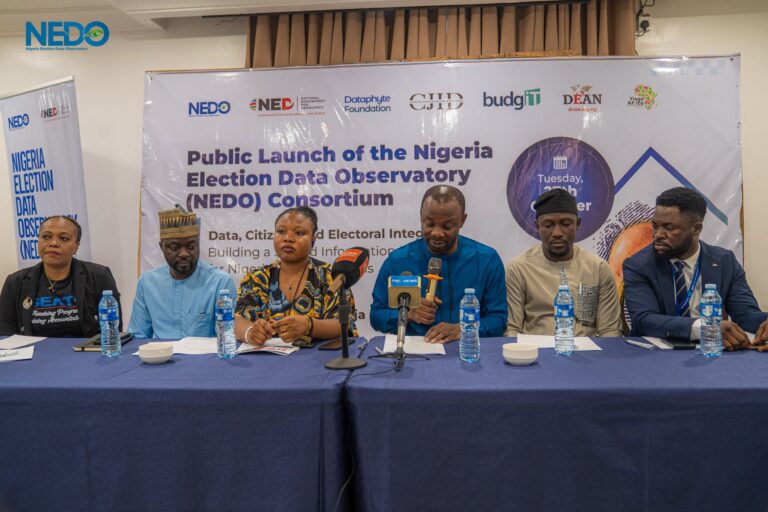
Oluseyi Olufemi, Country Director of Dataphyte Foundation, disclosed the planned deployment, explaining that observers would monitor activities throughout the electoral process, including election administration, voting, reported incidents, result collation and the publication of results.
According to Olufemi, the observers will use the NEDO Civic App to submit field reports and document developments as they occur. The information collected will be integrated into a central database, allowing the consortium to organise, verify and analyse reports from different locations.
The coalition comprises Dataphyte Foundation, YIAGA Africa, BudgIT Foundation, the Centre for Journalism Innovation and Development (CJID), and the Development of Educational Action Network (DEAN) Initiative. Dataphyte Foundation serves as the secretariat of the initiative.
NEDO was developed to address gaps in coordination among organisations involved in election observation, research, data collection and reporting. Rather than having separate groups gather and process information independently, the platform provides a common structure for sharing and analysing electoral data.
The system will use Application Programming Interfaces (APIs) and other data-sharing mechanisms to facilitate the exchange of information among participating organisations and their partners.
Olufemi said the initiative would bring together reports from observers, official election figures and information shared through independent media networks, giving stakeholders a stronger evidence base for assessing electoral developments.
He explained that the approach was intended to help journalists and civil society organisations produce more reliable reports by drawing on information that can be checked against multiple sources.
The consortium also plans to deploy Artificial Intelligence (AI)-powered Optical Character Recognition (OCR) technology to extract information from images of election result sheets published on the Independent National Electoral Commission’s (INEC) Result Viewing Portal (IReV).
The technology will convert the images into machine-readable data that can be organised and analysed for use on interactive election result platforms developed by consortium members, including Dataphyte Foundation and BudgIT Foundation.
The development comes amid growing concerns about the reliability of electoral information in an environment increasingly affected by AI-generated misinformation, deepfakes, political intimidation and other threats to public trust.
Olufemi noted that experiences from the 2023 General Elections demonstrated the need for a more coordinated and independent system for collecting and examining election information, particularly following concerns surrounding the transmission and publication of results on INEC’s IReV portal.
He also referenced YIAGA Africa’s September 2026 National Voting Intentions Survey, which found that 34 per cent of respondents expressed confidence in INEC’s ability to conduct credible elections.
The survey findings, he suggested, underscored the importance of improving access to credible information and strengthening mechanisms through which citizens can independently assess the electoral process.
Beyond election-day monitoring, NEDO plans to conduct research and assessments in the months leading up to the 2027 polls.
Olufemi said the DEAN Initiative would lead pre-election surveys and situation assessments examining the state of electoral preparedness, public perceptions, citizens’ confidence in the electoral process and potential risks that could affect the elections.
The findings are expected to inform a National Election Readiness Report, regional briefs and periodic situation reports, providing stakeholders with information on emerging developments ahead of the polls.
Following the elections, the consortium intends to conduct further analysis of the evidence gathered, compare relevant observer reports with official results and publish a comprehensive post-election report.
Selected datasets will also be made available for research, advocacy and electoral reform, subject to the initiative’s data-sharing arrangements.
According to Olufemi, the project represents an effort to establish a more coordinated civil society framework for addressing the challenges associated with electoral information, public accountability and trust in Nigeria’s democratic institutions.
He called on media organisations, civil society groups, researchers, technology partners and other relevant stakeholders to collaborate with NEDO, stressing the importance of collective participation in building a more transparent and dependable electoral information system ahead of the 2027 General Elections

