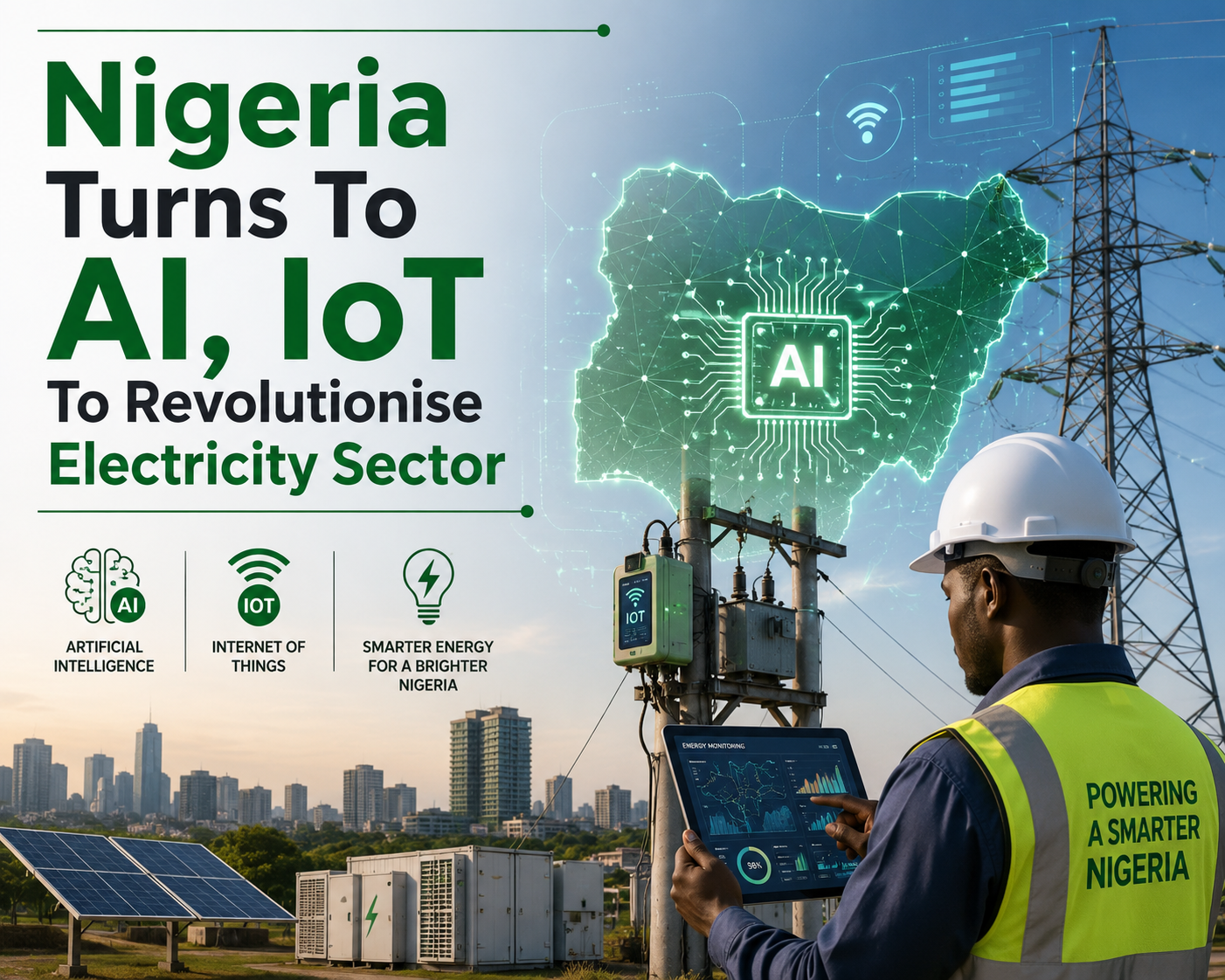
Nigeria is exploring the integration of Artificial Intelligence (AI) and the Internet of Things (IoT) as part of broader efforts to transform and modernise the country’s electricity sector, improve efficiency, and reduce system losses across the power value chain.
Titansloaded reports that the initiative is aimed at addressing longstanding challenges in Nigeria’s power industry, including unstable electricity supply, infrastructure inefficiencies, and high operational losses, by deploying smart technologies capable of enhancing real-time monitoring and predictive decision-making.
Stakeholders in the energy and technology ecosystem believe that AI-driven systems can significantly improve the performance of the national grid through predictive maintenance, enabling operators to detect faults before they escalate into major breakdowns that disrupt electricity supply.
Similarly, IoT-enabled devices are expected to play a crucial role in providing real-time data on energy generation, transmission efficiency, and consumption patterns, allowing for better management of power distribution across different regions.
Experts say the adoption of smart energy technologies could help Nigeria tackle key issues such as energy theft, equipment failure, and poor load balancing, which have consistently affected the reliability of electricity supply nationwide.
The move also aligns with Nigeria’s broader digital transformation agenda, which prioritises the use of emerging technologies to improve public infrastructure, drive innovation, and support economic growth in critical sectors such as energy, transportation, and manufacturing.
Industry analysts note that countries adopting smart grid systems are experiencing improved efficiency and reduced downtime, adding that Nigeria could achieve similar results if proper investment and implementation frameworks are established.
However, they caution that the success of AI and IoT integration in the power sector will depend on strong infrastructure development, stable internet connectivity, and supportive regulatory policies that encourage innovation while ensuring accountability.
Energy experts further stress the need for collaboration between government agencies, private sector players, and technology providers to ensure seamless deployment of digital tools across the electricity value chain.
Nigeria’s push toward smart energy systems reflects a growing global shift towards digitisation of critical infrastructure, with many countries already leveraging AI and IoT to build more resilient and efficient power networks.
If effectively implemented, the initiative is expected to significantly improve electricity reliability, reduce operational costs, and enhance overall service delivery in Nigeria’s struggling power sector.